
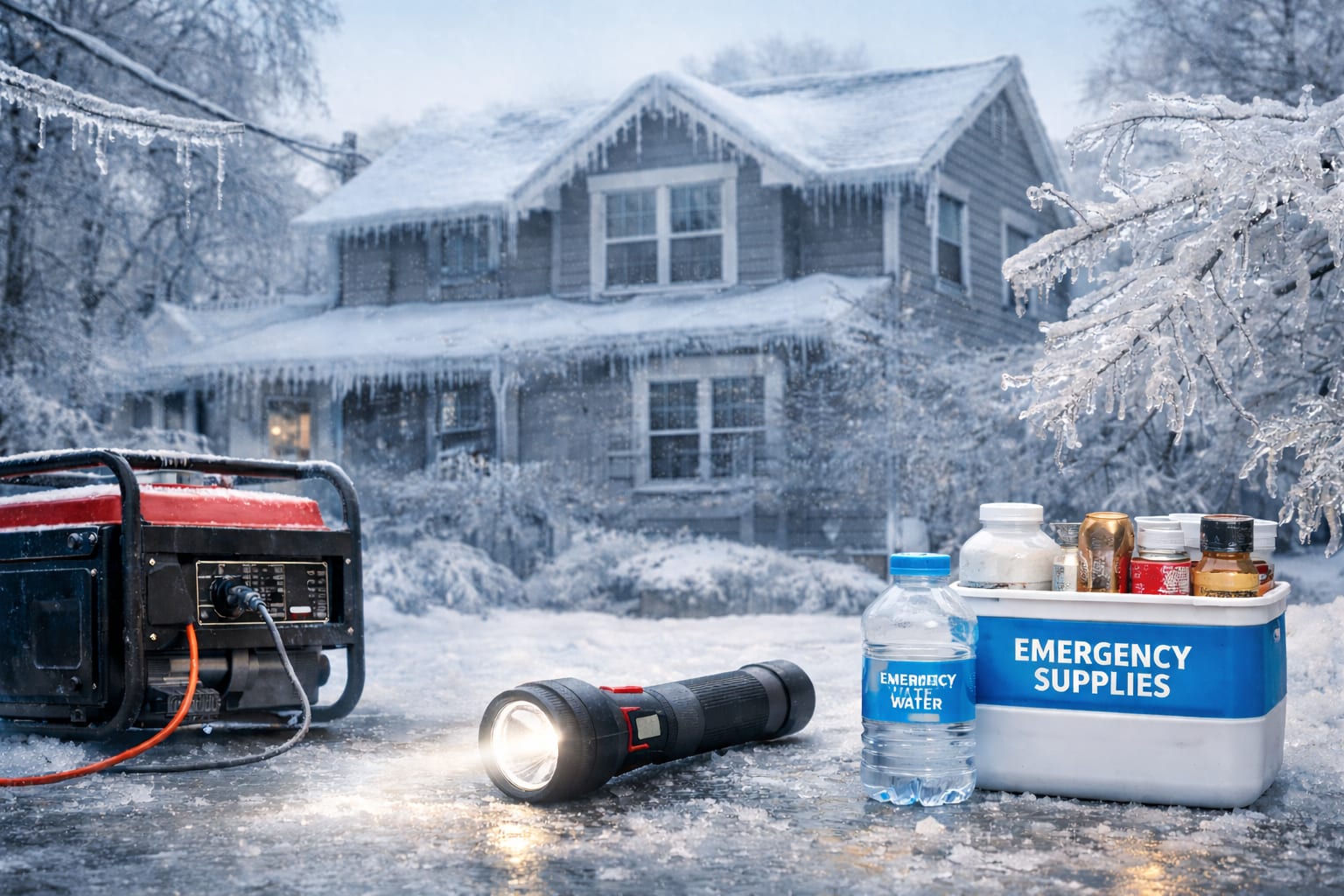

Why Ice Storms Are So Dangerous
Unlike snow, ice is heavy. Just a quarter inch of ice can:
-
Weigh down trees and cause large limbs to fall
-
Damage roofs, gutters, and siding
-
Knock out power for extended periods
-
Make roads and walkways extremely hazardous
In the Southeast, where homes and infrastructure aren’t always built for prolonged freezing conditions, the impacts can be amplified.
Before the Storm: Prepare Your Home
1. Inspect Trees and Gutters
-
Trim dead or overhanging branches, especially near your roof, driveway, and power lines
-
Make sure your smoke detectors and carbon monoxide detectors are working and have extra batteries on hand.
-
Change HVAC/Furnace filters to ensure they work as efficiently as possible.
-
Clear gutters and downspouts so melting ice can drain properly
This helps prevent ice buildup that can lead to water intrusion or structural damage.
2. Protect Pipes from Freezing
Frozen pipes are one of the most common (and expensive) ice-storm issues.
-
Insulate exposed pipes in crawl spaces, garages, and exterior walls
-
Disconnect and drain outdoor hoses
-
Know where your main water shutoff is located—just in case
If temperatures drop significantly, letting faucets drip slightly can help prevent freezing.
3. Prepare for Power Outages
Ice storms frequently cause multi-day outages.
Have on hand:
-
Flashlights and extra batteries (avoid candles if possible)
-
Portable phone chargers or battery packs
-
A battery-powered or hand-crank radio
If you have a generator:
-
Test it before the storm
-
Never run generators indoors or in garages
-
Keep fuel stored safely and properly
For safety guidance, follow recommendations from FEMA and Ready.gov.
4. Check Your Heating System
-
Schedule routine maintenance if winter weather is approaching
-
Make sure fireplaces and wood stoves are clean and venting properly
-
Keep space heaters at least 3 feet from flammable items
Never use outdoor grills or propane heaters inside the home.
During the Storm: Stay Safe
-
Stay off roads if possible—ice is far more dangerous than snow
-
Avoid walking under trees or power lines
-
Keep refrigerator and freezer doors closed to preserve food
-
If using a fireplace, open the damper fully and never leave fires unattended
If you lose power, wear layers and close off unused rooms to retain heat.
After the Storm: Assess Carefully
Once conditions improve:
1. Check for Damage
-
Look for missing shingles, sagging gutters, or fallen branches
-
Watch for water stains inside the home that could indicate leaks
-
Inspect fences, decks, and outdoor structures
Take photos of any damage for insurance purposes.
2. Be Cautious Around Ice and Power Lines
-
Assume all downed power lines are live
-
Avoid climbing ladders or getting on roofs while surfaces are icy
-
Hire professionals for tree removal and roof repairs
3. Prevent Future Issues
If your home experienced damage:
-
Consider upgrading insulation or pipe protection
-
Evaluate trees that may pose a future risk
-
Review your homeowners insurance coverage to ensure adequate protection
Final Thoughts
Ice storms may be unpredictable, but preparation doesn’t have to be. Taking proactive steps now can help protect your home, minimize costly repairs, and keep your family safe when winter weather strikes.
Stay safe, stay warm, and be prepared.